Resources

Public-facing research trails for psilocybin and DMT.

We gathered these studies into a cleaner chronological library so people can follow the history, major milestones, and modern clinical work without losing the thread.

Read Sozo Handbook
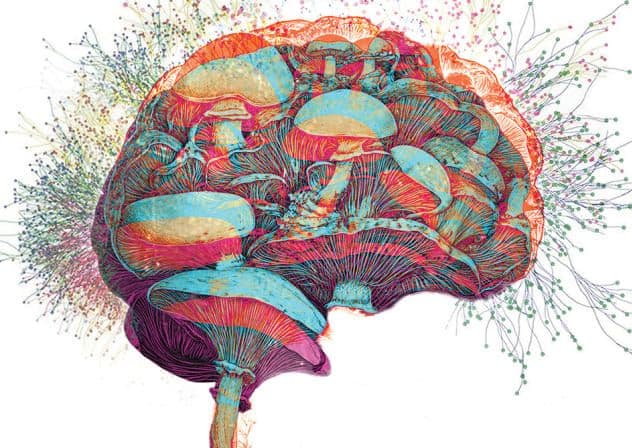
An abstract illustration of mushrooms intertwined with neural pathways.
Resources

A chronological map of modern psilocybin research.

1958
Sandoz
Albert Hofmann isolated psilocybin and identified its structure.

Early chemistry milestone that helped define psilocybin as a research compound.

Historical milestone
1960
Sandoz
Indocybin entered psychiatric research use.

Psilocybin was introduced into psychiatry as an investigational compound.

Historical milestone
1966
Sandoz
Distribution of indocybin to researchers was discontinued.

A turning point that narrowed formal access to psilocybin research.

Historical milestone
1971
United Nations
Convention on Psychotropic Substances.

International treaty that placed psychedelics under tighter global control.

Read publication
1994
University of New Mexico
Strassman and colleagues reopened modern human psychedelic research with DMT.

A landmark psychoactive trial involving 60 participants.

Read publication
2006
University of Arizona
Moreno et al. studied psilocybin for obsessive-compulsive disorder.

Journal of Clinical Psychiatry study with 9 patients.

Read publication
2011
UCLA / Harbor-UCLA
Grob et al. examined psilocybin for anxiety in advanced-stage cancer.

Archives of General Psychiatry study with 12 patients.

Read publication
2014
Johns Hopkins
Johnson et al. piloted psilocybin-assisted treatment for tobacco addiction.

Journal of Psychopharmacology study with 15 participants.

Read publication
2015
New York University / University of New Mexico
Bogenschutz et al. tested psilocybin-assisted treatment for alcohol dependence.

Journal of Psychopharmacology proof-of-concept study with 10 patients.

Read publication
Jul 2016
Imperial College London
Carhart-Harris et al. published an open-label feasibility study for treatment-resistant depression.

Lancet Psychiatry study with 19 patients.

Read publication
Dec 2016
New York University
Ross et al. reported rapid and sustained reductions in cancer-related anxiety and depression.

Journal of Psychopharmacology randomized trial with 29 patients.

Read publication
Dec 2016
Johns Hopkins
Griffiths et al. found substantial and sustained decreases in depression and anxiety in cancer patients.

Journal of Psychopharmacology randomized trial with 51 patients.

Read publication
2019 / Jan 2022
Compass Pathways / King's College London
Rucker et al. reported phase 1 COMP360 findings in healthy participants.

Journal of Psychopharmacology publication following a 2019 healthy-volunteer study with 89 participants.

Read publication
Nov 2020
Johns Hopkins
Davis et al. tested psilocybin-assisted therapy for major depressive disorder.

JAMA Psychiatry randomized clinical trial with 24 participants.

Read publication
Apr 2021
Imperial College London
Carhart-Harris et al. compared psilocybin with escitalopram for depression.

New England Journal of Medicine trial with 59 patients.

Read publication
May 2022
Compass Pathways
COMP360 treatment-resistant depression results were presented at APA and ASCP.

Conference posters summarizing data from 233 patients.

Read publication
Nov 2022
Compass Pathways
Goodwin et al. published a single-dose COMP360 trial for treatment-resistant depression.

New England Journal of Medicine phase 2 study with 233 patients.

Read publication
Resources

A chronological map of modern DMT research.

1956
Stephen Szára
One of the earliest published human DMT papers linked metabolism and psychedelic effects.

Experientia report that helped establish DMT as a human psychoactive research compound.

Read publication
1957
Szára et al.
Early follow-up publication described DMT as a new psychotic agent in humans.

A short historical paper often cited in the first wave of human DMT literature.

Read publication
1994
University of New Mexico
Strassman and Qualls published dose-response data on DMT’s neuroendocrine, autonomic, and cardiovascular effects.

Arch Gen Psychiatry paper from the modern reopening of controlled human DMT research.

Read publication
1994
University of New Mexico
Strassman, Qualls, Uhlenhuth, and Kellner published the companion subjective-effects paper.

Arch Gen Psychiatry report detailing the subjective response profile and rating scale findings.

Read publication
2019
UC Davis / ACS
Cameron et al. showed that chronic intermittent DMT microdoses enhanced fear extinction in rodent models.

ACS Chemical Neuroscience study reporting faster cued fear extinction, better retention, reduced immobility in forced-swim tests, and an antidepressant-like phenotype in rats, while also noting a sex-specific reduction in PFC dendritic spine density in female rats that was not seen in males.

Read publication
2019
Imperial / Scientific Reports
Timmermann et al. mapped neural correlates of the DMT experience with EEG.

A modern lab-based human neurophysiology paper that helped renew mechanistic DMT research.

Read publication
2021
Buenos Aires / Imperial
Pallavicini et al. studied neural and subjective effects of inhaled DMT in natural settings.

Journal of Psychopharmacology field study with 35 experienced participants.

Read publication
2022
Yale / VA Connecticut
D’Souza et al. explored dose-related safety, tolerability, and next-day antidepressant signals.

Neuropsychopharmacology phase 1 study with 3 healthy controls and 7 participants with major depressive disorder.

Read publication
2023
Imperial / PSP
Eckernäs et al. analyzed DMT’s EEG effects in a concentration-dependent PK/PD model.

Clinical pharmacology work linking plasma exposure to electrophysiologic changes.

Read publication
2024
Small Pharma / Imperial
James et al. published phase 1 safety, tolerability, and wellbeing data for SPL026 in healthy participants.

Randomized placebo-controlled Frontiers in Psychiatry trial that informed later depression dosing.

Read publication
2024
Imperial / Scientific Reports
Timmermann et al. reported mental health outcomes after IV DMT in healthy volunteers.

Scientific Reports analysis spanning placebo-controlled and prospective datasets totaling 30 healthy volunteers.

Read publication
2024
British Journal of Pharmacology
Werle et al. found that ayahuasca enhanced fear extinction in male and female rats.

This rodent study tied within-session fear-extinction effects to infralimbic cortex 5-HT2A and 5-HT1A receptor signaling.

Read publication
2025
Biomedicine & Pharmacotherapy
Egger et al. studied the pharmacokinetic and pharmacodynamic interaction of DMT and harmine.

Dose-escalation healthy-volunteer research expanding the clinical picture around combined administration.

Read publication
2025
University Hospital Basel
Erne et al. tested continuous DMT infusions and self-guided titration in healthy participants.

Neuropsychopharmacology placebo-controlled crossover study with 22 participants.

Read publication
2026
European Neuropsychopharmacology
Werle et al. reported that ayahuasca reduced traumatic-like fear memories through BDNF-dependent mechanisms in rats.

The study linked reduced fear generalization and extinction benefits to infralimbic cortex BDNF-TrkB signaling in a preclinical rodent model.

Read publication
2026
Imperial / Cybin
Erritzoe et al. published a phase IIa randomized placebo-controlled trial of DMT for major depressive disorder.

Nature Medicine paper with 34 randomized participants showing rapid antidepressant effects with psychotherapeutic support.

Read publication